
Bed bugs rarely arrive on their own. They come in on things: a thrifted dresser, a mattress from a rental, a sofa picked up from the curb. They hide in seams, joints and crevices, which is exactly what furniture has plenty of, and a single pregnant female can start a full infestation.
If you are decorating on a budget or buying used pieces, a few minutes of checking before anything crosses your doorstep can save weeks of trouble. This guide covers where to look, why furniture is hard to treat, and what to do if you find bugs.
How to check furniture and mattresses
Use a flashlight, and check in daylight if you can. Bed bugs are small and flat, about the size of an apple seed, and they stay out of sight.
- Mattresses and box springs: run the light along seams, piping and tags, then flip the box spring and check the fabric underneath.
- Wooden furniture: look in drawer rails, joints, screw holes and any cracks in headboards or bed frames.
- Upholstered pieces: lift the cushions and check zippers, folds and the frame underneath, especially around staples and stitching.
The signs to look for are live bugs, small dark spots that smear when wiped (droppings), tiny pale eggs or shed skins, and rusty stains on fabric. One or two spots near a seam are enough reason to walk away from a used piece.
If a piece is already inside, check it again over the first two weeks. Bugs from an older infestation can take time to show up.
Why sprays and DIY methods struggle with furniture
Furniture is full of hiding places: stitched seams, hollow frames, spring coils and the gap behind every staple. A spray only kills what it physically touches, and bed bug eggs are sealed in a shell that most liquids do not get through. Foggers are worse for furniture, because the mist rarely reaches inside the seams and can push bugs deeper into the room.
A household steamer helps on the surface, but it cannot hold a lethal temperature inside a cushion or a mattress core.
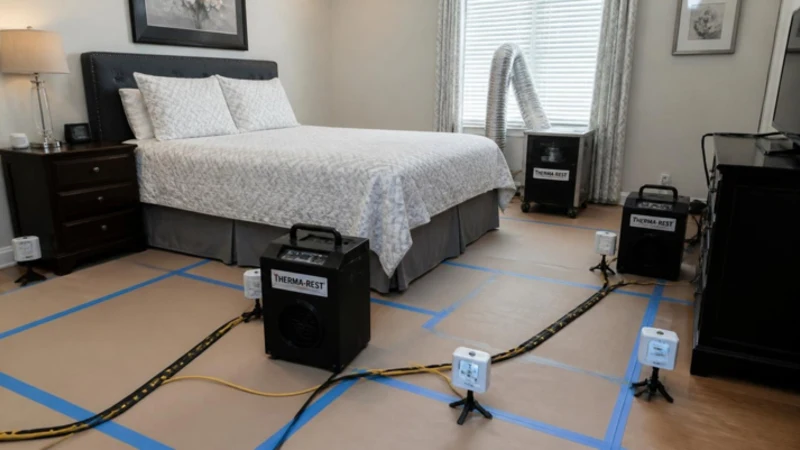
Heat works differently. Bed bugs and their eggs die when the temperature reaches roughly 118°F and stays there, and professionals run higher, typically 130 to 140°F, so the heat gets through to the middle of furniture. That is why a search for bed bug heat treatment Houston usually leads to whole-room service: the room is heated at once, not piece by piece, and it works without chemicals on beds, sofas and headboards.
A bedroom set up for a whole-room heat treatment, with heaters, fans and temperature sensors placed around the bed.
What to do right away if you find bed bugs
- Leave the piece where it is. Dragging furniture from room to room spreads bugs and eggs.
- Wash and dry bedding on high heat. Thirty minutes in a hot dryer is enough to kill bugs and eggs in fabric.
- Vacuum seams and crevices, then seal the vacuum bag in a plastic bag and throw it out outside.
- Encase the mattress and box spring in zippered covers so any remaining bugs cannot move in or out.
- Skip foggers and home sprays. They rarely solve the problem and can scatter bugs into other rooms.
- Get it confirmed. A pest professional can tell bed bugs from look-alikes and explain the options for your home before you decide what to do.
A last word before you buy
Used furniture is one of the best ways to decorate on a budget, and a careful look takes only a few minutes. Check the seams, keep new pieces apart from the bedroom for the first couple of weeks, and act early if anything looks wrong. Bed bugs are far easier to deal with when they are caught at a single piece than after they have spread through a room.