
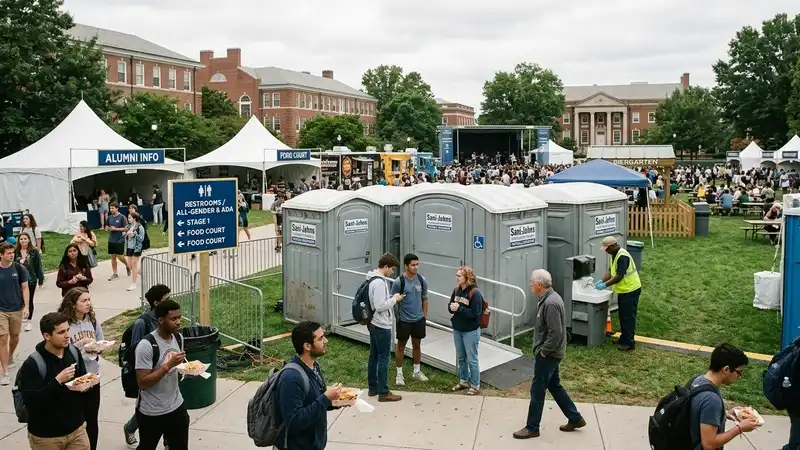
College campuses host a wide range of outdoor events, including orientation activities, alumni weekends, student festivals, concerts, athletic gatherings, fundraising events, graduation celebrations, club fairs, and seasonal campus traditions. These events can bring together students, faculty, staff, families, alumni, vendors, and visitors who may be unfamiliar with the campus layout.
Portable restroom planning helps event organizers support those crowds without relying entirely on permanent campus facilities. The right setup depends on expected attendance, event duration, campus geography, food and beverage service, accessibility, and how people will move between parking, residence halls, athletic areas, quads, and event spaces.
Start With the Complete Event Footprint
Campus events can spread across multiple areas rather than staying inside one fenced venue. A festival may include a central lawn, food trucks along a nearby street, entertainment near a student center, and activities in another courtyard.
Event planners should map the complete footprint before deciding where restrooms belong. Include entrances, parking areas, shuttle stops, stages, vendor rows, food service, seating, activity zones, athletic fields, and staff areas.
The goal is to place restroom facilities according to where attendees will actually spend time. A cluster that is convenient for one section of the event may be too far away for guests on the opposite side of campus.
Consider Existing Campus Restrooms
One advantage of college events is that permanent restrooms may already exist in nearby academic buildings, student centers, athletic facilities, residence halls, or libraries. However, planners should not automatically assume those facilities can handle the full event.
Buildings may have limited weekend hours, restricted student access, security requirements, or other activities happening at the same time. Sending large crowds into a nearby building can also create congestion and additional custodial needs.
Portable facilities can supplement existing restrooms and reduce pressure on campus buildings. Planners should confirm which permanent facilities will actually be open before counting them as part of the event sanitation plan.
Distribute Facilities Across Large Events
One centralized restroom area may work for a smaller gathering, but larger campus festivals often benefit from multiple locations. Students and guests should not have to cross the entire event site every time they need a restroom.
When arranging portable toilet rental for a large campus event, planners can position facilities near major activity zones while keeping them away from food preparation, performance entrances, and primary pedestrian bottlenecks.
Smaller clusters located around the event can also help distribute lines. Good signage should direct guests toward more than one restroom location so the closest cluster does not become unnecessarily crowded.
Plan Around Student Pedestrian Traffic
College campuses are heavily pedestrian-oriented. Sidewalks, quads, courtyards, bike paths, residence hall entrances, and building walkways may remain busy even while an event is taking place.
Portable restrooms should not narrow major walking routes or force guests into streets, bicycle lanes, or landscaping. Lines should have enough room to form without blocking normal campus traffic.
Planners should also consider students who are simply moving between dorms, libraries, dining areas, classes, or other activities and are not attending the event. A sanitation setup should support the festival without disrupting the rest of campus.
Include Accessible Restroom Options
Accessibility should be included in the original event layout rather than added later. Accessible portable restrooms should be located near practical travel routes and important event areas.
The path to the units matters. Grass, steep slopes, curbs, loose gravel, temporary cables, and crowded vendor areas may make an otherwise accessible facility difficult to reach.
Planners should consider attendees using wheelchairs, walkers, scooters, canes, or other mobility aids. Accessible units should be placed near firm, relatively level surfaces whenever possible and connected to routes that remain open throughout the event.
Support Food and Beverage Areas
Many campus festivals include food trucks, catered meals, student organization booths, beverage tents, concession areas, or local vendors. These areas usually increase restroom demand.
Restrooms should be reasonably close to food and seating areas while maintaining enough separation from preparation and dining spaces. Handwashing or sanitizing stations can also be useful near restroom clusters and food service zones.
If the event includes alcohol service, planners should account for additional restroom demand and make water stations easy to find. Guest comfort often depends on how well these amenities are distributed throughout the site.
Plan for Families and Visitors
Some campus events primarily attract students, while others draw parents, children, alumni, prospective students, and members of the surrounding community. These visitors may not know where permanent campus restrooms are located.
Portable facilities should be easy to identify from entrances and major gathering areas. Maps, event programs, directional signs, and volunteer stations can all help guests find them.
Family-oriented events may also need restroom access near children’s activities, picnic areas, games, or outdoor entertainment. Parents should not have to cross an unfamiliar campus whenever a child needs a restroom.
Account for Peak Attendance
College events often have sharp attendance peaks. A concert may become crowded shortly before the headliner begins. A homecoming festival may surge after an athletic event ends. Graduation celebrations may experience heavy restroom use when ceremonies conclude.
Sanitation planning should consider these peaks rather than relying only on average attendance throughout the day.
Event planners should review the schedule and identify the periods when the largest number of people may be on-site simultaneously. Restroom placement and capacity should support those high-demand windows.
Keep Service Routes Available
Campus events can make service access difficult. Temporary fencing, stages, tents, vendor vehicles, parked cars, tables, barricades, and pedestrian crowds may all appear after the portable restrooms have been delivered.
Planners should preserve a route for servicing and eventual pickup. Facilities should not become trapped behind a stage, enclosed vendor area, or temporary pedestrian zone.
For multi-day festivals, this becomes especially important because units may require cleaning, pumping, or restocking between event days.
Coordinate With Campus Operations
College events often involve several campus departments. Facilities management, security, parking, athletics, student affairs, food service, grounds crews, custodial teams, and event staff may all have responsibilities.
Portable sanitation plans should be shared with the appropriate campus teams. Facilities staff may know about underground utilities, irrigation, restricted service roads, or landscaping concerns that affect placement. Security personnel may need to maintain certain emergency routes.
Early coordination prevents sanitation planning from conflicting with other parts of the campus event plan.
Prepare for Weather
Outdoor campus events can be affected by heat, rain, wind, or unexpectedly cold conditions. Weather can change restroom usage and make certain locations harder to reach.
Avoid low areas where water collects and locations where heavy foot traffic could quickly create mud. Units should be placed on stable ground whenever possible.
If an event continues after dark, restroom routes should also be adequately lit. Lighting is particularly important on large campuses where attendees may already be unfamiliar with their surroundings.
Monitor Facilities Throughout the Event
Restroom planning should continue after guests arrive. Event staff should periodically check lines, cleanliness, supplies, ground conditions, signage, and accessibility.
If one restroom area becomes crowded while another stays quiet, additional directional signs may help distribute demand. If supplies run low, the issue should be addressed before it becomes a larger complaint.
Staff and volunteers should also know the location of each restroom cluster so they can quickly direct visitors who ask for help.
Scale Down Carefully After the Event
Multi-day campus events sometimes shrink gradually rather than ending all at once. Vendors may remain for cleanup, student groups may break down booths, and event crews may work several hours after guests leave.
Portable restrooms should remain available long enough to support those workers. Removing every unit immediately after the public portion ends can leave staff without convenient facilities during teardown.
The sanitation schedule should therefore include setup and breakdown periods, not just public event hours.
Portable restroom planning for college campus events requires attention to more than attendance numbers. Planners need to consider permanent campus facilities, pedestrian traffic, accessibility, food service, families, event schedules, service routes, weather, and the needs of staff working before and after the event.
A well-distributed sanitation plan helps visitors navigate the campus more comfortably and reduces pressure on nearby buildings. When portable restrooms are integrated into the larger event layout from the beginning, they support smoother crowd movement and a better experience for students, staff, alumni, families, and community guests.