
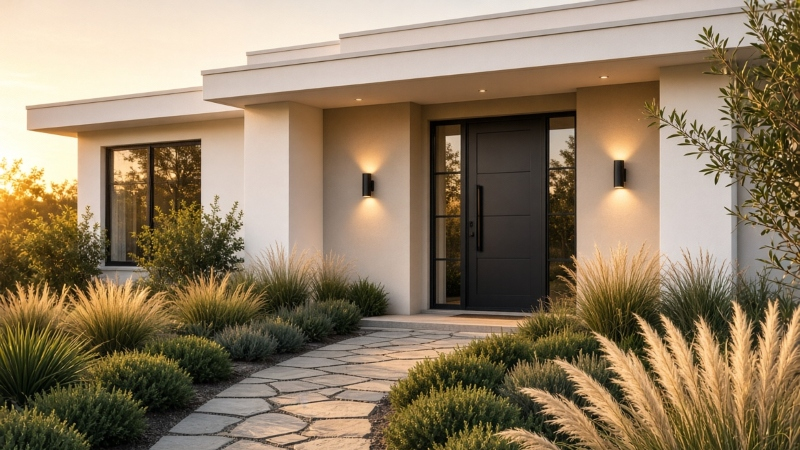
Walk down any street and you can spot the houses that have been “updated.” Fresh paint that already looks tired at the edges. New planters that sit awkwardly against the foundation. A brightly colored door that somehow still feels like an afterthought. These are the homes that followed the usual advice clean it, paint something bold, add lights, stick in a few plants and yet something still feels off.
The problem is rarely the individual idea. The problem is treating the exterior like a checklist instead of a conversation with the house itself.
Your home’s outside is the only part most people will ever truly see. It sets the emotional tone before anyone reaches the front step. When that tone feels forced or incomplete, the whole place registers as temporary. The best exterior work does the opposite: it makes the house feel more itself, not more trendy.
Start by Looking at Your House the Way a Stranger Does
Most of us stop seeing our own homes after a few years. We notice the broken shutter or the weeds, but we stop noticing the overall composition. Try this instead: stand across the street or at the end of the driveway and look as if you are seeing the place for the first time.
Ask three simple questions. Does the entrance feel like the clear focal point? Do the proportions of the house feel balanced, or does one element (garage, porch, roofline) dominate uncomfortably? Does the landscape support the architecture or fight it?
This quiet observation step changes everything that follows. Without it, every improvement risks becoming another disconnected layer.
Clean With Purpose, Not Just Force
Everyone recommends washing the exterior. Few people talk about what you should actually be looking for while you do it.
Dirt, algae, and dust accumulate unevenly. The side that faces prevailing weather or the afternoon sun usually shows wear first. Instead of blasting everything equally, clean in sections and pause to study what the surface is telling you. Is the paint failing because of moisture trapped behind it? Are there stains that keep returning in the same places? Those patterns matter more than a temporary shine.
In hotter or monsoon-prone climates, this step is even more important. Moisture and heat accelerate everything. A surface that looks merely dirty may already be compromised underneath. Addressing the cause early saves far more money than any cosmetic fix later.
Color That Respects Light and Context
Choosing an exterior color is less about personal taste and more about how light moves across the building throughout the day. Colors that look rich on a paint chip often wash out or turn muddy once they meet real sunlight and neighboring houses.
Warmer, earth based tones have been gaining ground recently for good reason. They tend to age more gracefully and sit more comfortably in mixed neighborhoods. Deep greens, soft terracottas, and muted olives can feel current without shouting. The door remains the place for a stronger statement, but even there the color should feel intentional rather than random.
Test larger samples on the actual wall and live with them for a few days in different light. Morning light, late afternoon, and cloudy days all change the reading. What looks perfect at noon can feel completely different at dusk.
Lighting That Invites Instead of Interrogates
Outdoor lighting is usually treated as a security or visibility problem. The better approach treats it as atmosphere.
Layer soft path lights with a couple of carefully placed wall fixtures near the entrance. Avoid the single harsh floodlight that turns the front of the house into a stage. Warm-toned light (closer to 2700–3000K) feels more welcoming than cool white. Solar options have improved enough that many of them now deliver consistent, usable light without the wiring hassle.
The goal is simple: when someone approaches after dark, the house should feel quietly awake rather than startled.
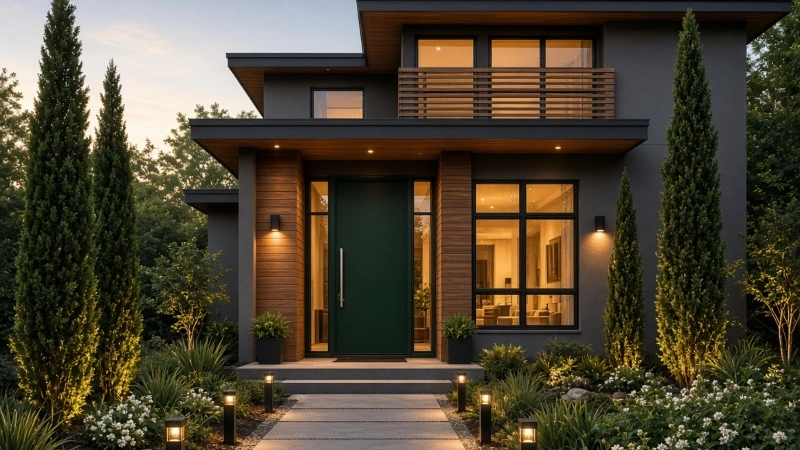
Plants as Structure, Not Decoration
Landscaping fails when it is treated as an afterthought scattered in front of the foundation. Think of plants as extensions of the architecture instead.
Tall, narrow shrubs or small trees at the corners can visually anchor the house and make it feel more grounded. Lower, mounding plants along walkways soften hard edges and guide the eye toward the entrance. Choose species that match your climate and the amount of care you are realistically willing to give. In hot or dry regions, drought-tolerant plants that still offer texture and seasonal interest perform better than high-maintenance flower beds that struggle for half the year.
Over time, the best plantings start to look like they have always belonged there. That sense of belonging is what separates lasting curb appeal from temporary decoration.
The Quiet Details That Signal Care
House numbers, the mailbox, the condition of the walkway edges, the hardware on the door — these small elements carry surprising weight. When they are neglected, even a freshly painted house can feel unfinished. When they are considered, they create a quiet sense of intention.
Choose materials and finishes that can handle weather without constant attention. Numbers that sit slightly off the wall create interesting shadows. A simple, well-proportioned mailbox or a clean, defined path edge does more for the overall impression than most people expect.
Avoid the Trap of Looking New but Temporary
The most common exterior mistake is chasing an instant transformation. New plants that are too small for the space, paint that was chosen purely for trend, lighting that feels generic — these solutions often look good for a season and then begin to feel disconnected.
Work in layers instead. Fix the underlying surface conditions first. Make one strong, considered change to the entrance. Add lighting that actually improves how the house feels at night. Introduce plants that can grow into the architecture rather than sit in front of it. Give each change time to settle before adding the next.
This slower approach produces exteriors that feel coherent years later rather than dated after one season.
What Actually Lasts
Homes that maintain strong curb appeal over time share a few quiet qualities. The entrance is clear and welcoming. The materials and colors feel rooted in the place rather than imposed on it. The landscape supports the building instead of competing with it. Maintenance is manageable because the original choices respected climate and realistic upkeep.
None of this requires a complete renovation or a large budget. It does require looking carefully, choosing deliberately, and resisting the urge to solve everything at once.
The exterior of your home is not a project you finish. It is an ongoing relationship with the building and the street it sits on. When that relationship feels honest, the house stops looking updated and simply starts looking right.