
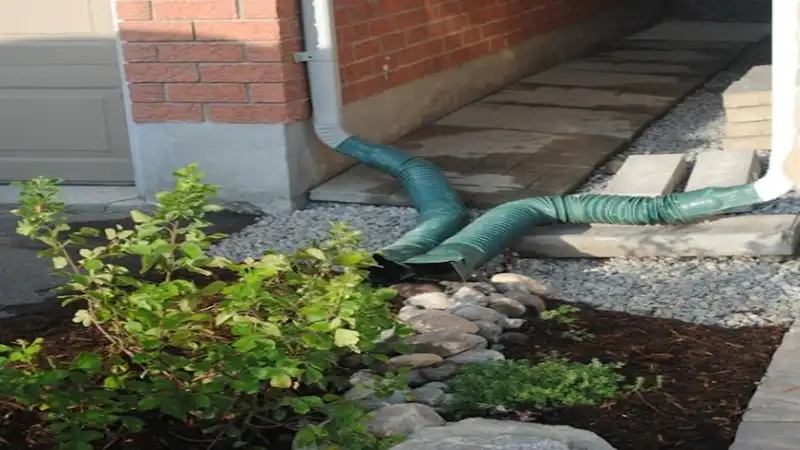
When the rain finally stops and you see that water has pooled in your yard, you might want to grab your car keys and drive straight to the hardware store around the corner and buy a drainage pump.
Before you do, though, take a moment to look at where the water is coming from. The best place to start is your roof. Take a good look at your fascia board, gutters, and downpipes, because a typical 2,000-square-foot roof can deliver more than 1,200 gallons of water with an inch of rainfall. That’s a lot of water that has to be channeled away from your roof.
If your gutter and drainage systems aren’t in tiptop shape, water from your roof will end up in your yard. Runoff should be controlled to protect your yard, home structure, walkway, driveway, foundation, and basement.
1. Spot the Source: Distinguish Roof Runoff From Poor Grading or Saturated Soil.
Before digging up your yard, identify the root of the issue. There are several different drainage problems and solutions up for discussion:
Roof Runoff:
Look for bare patches of soil near the eaves of your roof, eroded soil around the edge of your yard, or muddy water shooting up along the house siding. If you have large puddles near the base of your home after a storm, it may be due to too much runoff from your roof.
Poor Grading:
If puddles are forming in your yard or water keeps running down your gutters towards your foundation after only a light drizzle, you may have improper grading. Your yard should slope away from your foundation by at least 6 inches within the first 10 feet.
Saturated Soil:
If stormwater doesn’t drain from your yard, you may have clay soil or a high water table in your area. This type of saturation will soak your lawn rather than forming puddles the way runoff from your roof would. It’s worth inspecting and fixing roof runoff before resolving localized grading issues.
2. Keep Runoff Controlled: clear debris, inspect gutter flow, and consider suitable debris protection.
The main channel for collecting rainwater from roofs and directing it where needed is through gutters and downspouts. But gutters can get clogged with leaves, twigs, and other debris. Clogged gutters will cause water to spill over the edges of the gutter and inevitably cause erosion and water pooling in the gutter and your yard.
Ideally, gutters should be inspected regularly, especially during autumn and spring, when leaves drop everywhere and can get trapped in gutters. Homeowners invest in gutter protection systems to reduce the frequency of cleaning gutters and to lessen possible gutter damage.
The best leaf protection covers prevent clogs while using surface tension to carry water right into the gutter. Specialized installations such as high-quality debris-resistant gutter systems are used by local professionals like Gutter Cover KC in Kansas City.
3. Repair or replace failing gutters
distinguish isolated clogs from persistent leaks, sagging, or inadequate capacity.
Structural defects or clogged gutters will inevitably cause water damage. Here is a checklist to see if you have to repair or replace:
- When you notice puddles under sections of the gutters, or perhaps water that keeps dripping or even running from the gutter edges, your gutters might be clogged. It is time to remove any debris and flush out the gutters.
- When you notice parts of the gutter sagging with water trapped inside even after the rain is long gone, it is time to re-slope any sagging gutters and to make sure the fascia boards are level as well.
- When you notice your gutters have cracks or are splitting in some areas, causing water to keep dripping, or if certain areas of the gutter are rusted, it is time to seal the leaks or replace the sections that can’t be fixed.
- When you notice the gutter is clean with no visible flaws, yet it overflows during normal rains, it may be time to upsize the gutters and downspouts to accommodate the typical rainfall in your area.
A properly designed and maintained gutter system helps manage roof runoff and reduce the risk of erosion, water pooling, and basement moisture. It should work alongside suitable grading and landscape drainage.
4. Coordinate downspout outlets with landscape drainage; finish with a ground-level inspection checklist.
Make sure you are channeling or integrating the rainwater from your roof to a safe discharge point:
Downspout Extensions:
Direct the water flow towards catch basins, and extend downspouts at least 10 feet away from the foundation of your home.
Underground drains:
Connect downspouts to nonperforated underground drainage pipes that slope away from the house and discharge at a suitable outlet or designed collection system.
Rain Gardens and Swales:
Plant native perennial plants with deep roots or create a small “wetland” area with the right plants, and direct the water into that section of your yard to temporarily hold runoff water.
Ground-Level Inspection Checklist:
Seasonally check that underground pipes are free from mulch, debris. Growing roots and that the ground slopes downward and away from any structures.