
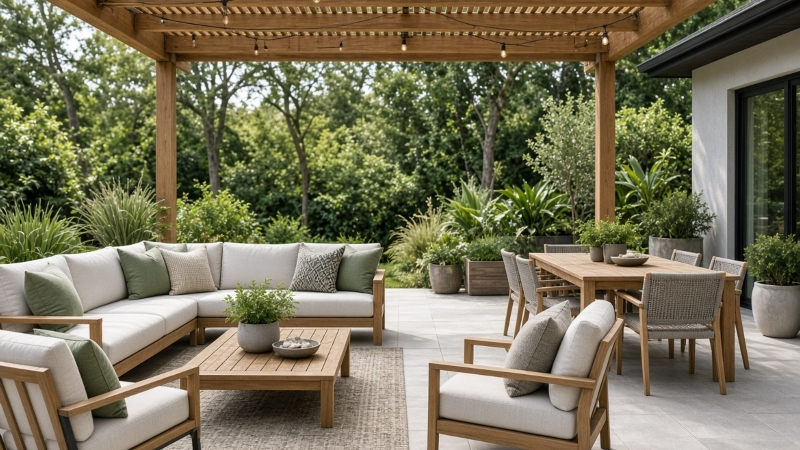
Renovating your patio is one of the smartest ways to expand your living space, boost home value, and create a place where you actually want to spend time. Whether your current patio is cracked, outdated, or simply underused, a thoughtful renovation can turn it into a comfortable outdoor room for dining, relaxing, or entertaining.
This guide follows the practical, budget-conscious approach that Decoradhouse stands for — useful upgrades that look great without unnecessary spending. You’ll find clear steps, material options, cost ranges, and design ideas that work for real homeowners in 2026.
1. Assess Your Current Patio and Set Clear Goals
Before buying anything, walk outside and evaluate:
- Condition of the surface (cracks, uneven spots, drainage issues)
- How much sun or shade the area gets throughout the day
- What you want to use the space for (dining, lounging, cooking, kids’ play)
- Your budget and whether you plan to DIY or hire help
Write down 3–5 main goals. This keeps the project focused and prevents overspending. Proper drainage is especially important — the patio should slope slightly away from the house (about ¼ inch per foot) to avoid water problems later.
2. Decide on the Right Material for Your Renovation
Material choice affects cost, durability, maintenance, and look. Here are popular 2026 options:
| Material | Approx. Cost per Sq Ft (Installed) | Best For | Maintenance Level |
|---|---|---|---|
| Plain Concrete | $5–$15 | Budget & durability | Low |
| Stamped Concrete | $8–$19 | Decorative look | Low–Medium |
| Concrete/Brick Pavers | $10–$17 | Flexibility & style | Medium |
| Natural Stone/Flagstone | $15–$35 | Premium, natural feel | Medium |
| Porcelain Pavers | Higher end | Modern, low-maintenance | Very Low |
For many homeowners following the Decoradhouse style, pavers or stamped concrete offer the best balance of beauty and practicality. If you’re on a tighter budget, cleaning and sealing existing concrete or adding a simple overlay can still create a big visual upgrade.
3. Plan Layout, Shade, and Function Zones
Good renovations feel intentional. Divide the space into zones if possible:
- Dining area near the house for easy kitchen access
- Lounge/seating zone with comfortable furniture
- Optional cooking or fire feature zone
Shade is critical. Consider a pergola, retractable awning, large umbrella, or even a simple shade sail. Lighting (string lights, wall sconces, or solar path lights) makes the patio usable after dark and adds atmosphere.
4. Prepare the Base Properly (The Step Most People Skip)
A solid foundation prevents cracking and shifting:
- Clear the area and remove old materials if needed.
- Excavate to the correct depth.
- Add and compact a proper base (usually crushed stone or gravel).
- Ensure correct slope for drainage.
- Install edge restraints if using pavers.
Skipping or rushing this step is the most common reason renovations fail within a few years.
5. Install the Surface and Add Finishing Touches
Once the base is ready:
- Pour and finish concrete, or lay pavers/stone carefully.
- Fill joints properly (polymeric sand is popular for pavers).
- Clean the surface thoroughly.
- Seal if recommended for your material.
Then layer in the fun parts: outdoor furniture, an outdoor rug, planters, cushions, and lighting. Keep furniture weather-resistant and choose pieces that match how you actually use the space.
6. Budget and Timeline Expectations (2026)
A full patio renovation typically ranges from a few thousand dollars for a simple refresh to $5,000–$15,000+ for larger or higher-end projects, depending on size, materials, and labor. Average full installations often fall around $4,000 according to recent data, but smaller DIY updates can cost far less.
Timeline: Simple surface refreshes can be done in a weekend. Full renovations usually take 1–3 weeks depending on complexity and weather.
Common Mistakes to Avoid
- Ignoring drainage and slope
- Choosing materials that don’t suit your climate
- Overcrowding the space with too much furniture
- Forgetting about lighting and shade
- Skipping sealing or maintenance planning
Final Tips for a Successful Patio Renovation
Start with a clear plan and realistic budget. Focus on quality in the foundation and materials you can’t easily change later. Add personality with plants, textiles, and lighting once the hard surfaces are done.
For more practical ideas on outdoor styling, budget-friendly upgrades, and home exterior improvements, visit https://upgradesdecoradhouse.com/. You’ll find helpful guides that follow the same straightforward Decoradhouse approach — making your home more beautiful and comfortable without overspending.
A well-renovated patio doesn’t just look better, it becomes a space you’ll actually use and enjoy for years. Take it one step at a time, and you’ll end up with an outdoor area that feels like a natural extension of your home.